Q: What do tooth fairies have on their phone?
A: Bluetooth!
Q: What do tooth fairies have on their phone?
A: Bluetooth!
Friendly, stress-free children’s dentistry for lifelong oral health
Bringing a child to the dentist for the first time can feel like a bigger deal for the parent than it does for the child. At Adelaide Dental Solutions on Port Road, Woodville South, our aim is simple: to make it unremarkable. A calm, unhurried first visit — where nothing much happens beyond a look, a count and a chat — is what sets a child up to feel comfortable at every appointment after it.
We recommend a first visit at around age one, or within six months of the first tooth appearing. That early visit is less about treatment than familiarity: getting your child used to the chair, and giving you practical guidance on brushing, diet and habits like thumb-sucking while it’s easy to shape them.
Children’s dental care here is looked after by our oral health therapists, who see young patients up to age 18 and are trained specifically in caring for children. If your child is nervous, tell us when you book — knowing beforehand lets us give them the time they need.

Child Dental Benefits Schedule — bulk billed at our practice
Many families are eligible for the Child Dental Benefits Schedule (CDBS) without realising it. It's a Federal Government program that covers a set amount of dental care for eligible children, and at Adelaide Dental Solutions we bulk bill it — which means eligible families pay nothing out of pocket for the services it covers.
What the CDBS covers
The CDBS provides up to $1,158 per eligible child over a two-year period. It covers the everyday care most children need: examinations, X-rays, cleaning, fluoride treatments, fissure sealants, fillings, root canals and extractions. It does not cover orthodontic treatment or cosmetic dental work, and it can't be used for services provided in a hospital.
Who is eligible
To be eligible, a child needs to be aged 0–17 for at least one day of the calendar year, be eligible for Medicare, and the family needs to receive a qualifying payment such as Family Tax Benefit Part A for at least one day of that year. Services Australia assesses eligibility, not us — but we can check it for you in about a minute over the phone with your Medicare details, so you don't have to work it out yourself.
How it works here
Call us on (08) 8244 3677 with your Medicare card handy and we'll confirm your child's eligibility and remaining balance before the appointment. If they're eligible, we bulk bill the covered services directly to Medicare — there's nothing for you to claim back and no gap to pay for those items. If any treatment falls outside what the CDBS covers, we'll tell you before it's done and explain what it costs.
Balances reset on a two-year cycle and unused amounts don't roll over indefinitely, so it's worth checking where your child stands rather than assuming.
If your child has a dental emergency, see our emergency dentist page in Woodville for first-aid steps and what to do first.
Expert oral health therapists
Our oral health therapists look after all children’s dental work up until the age of 18. Not only do they take excellent care of our young patients’ teeth – they also know how to keep your children happier and more relaxed.
Fun, child-friendly environment
Fun, child-friendly environment
Why Adelaide Dental Solutions for Children’s Dentistry?
Experienced And Child-friendly Therapists
Leading Techniques And Materials
Personalised Solutions
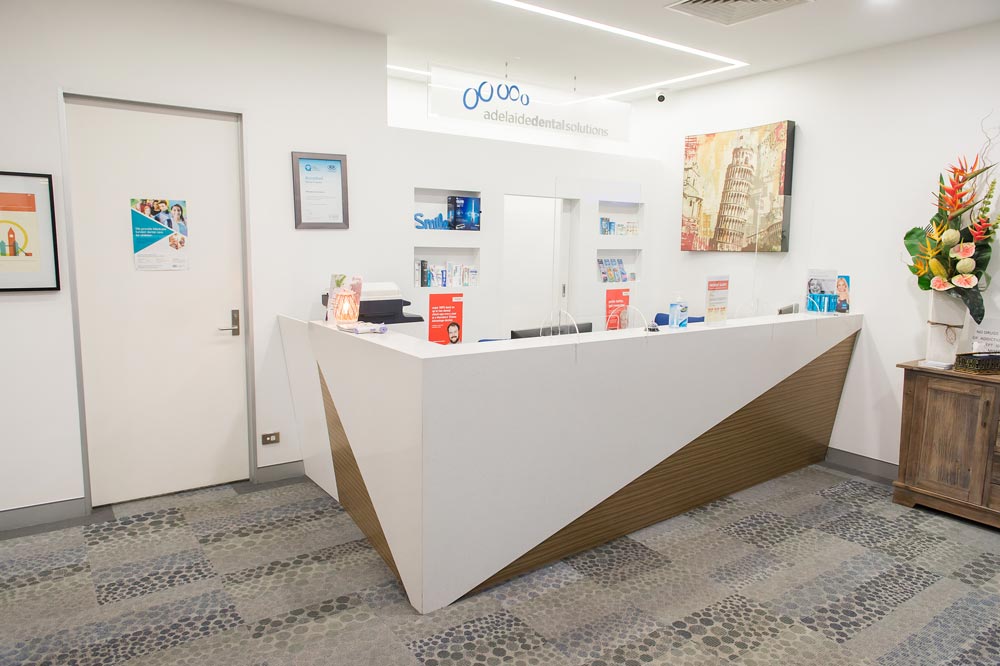
Our practice in Woodville South
Adelaide Dental Solutions is at Suite 1, 850 Port Rd, Woodville South — in the same precinct as the Queen Elizabeth Hospital, with parking on site.
Frequently Asked Questions
What toothbrush do you recommend for children - electric or normal?
Either works well. What matters far more is technique and supervision: a small, soft-bristled head, twice a day, and an adult helping or checking until around age eight. Some children brush more willingly with an electric brush, and some find the vibration unpleasant — either is fine. We’re happy to demonstrate technique at your child’s visit.
Why is fluoride important and when do the children start using fluoride toothpaste?
Fluoride strengthens enamel and makes it more resistant to the acids that cause decay. Children under two generally don’t need fluoride toothpaste unless a dentist advises otherwise. From ages two to six, a low-fluoride children’s toothpaste with a pea-sized amount is usually recommended, and from about age six most children can move to standard family toothpaste. Encourage spitting rather than rinsing, and supervise to limit swallowing.
When do the baby teeth fall out?
Most children lose their first baby tooth between ages six and eight, usually the lower front teeth, and the process continues until around age twelve. There’s a wide normal range — some children start earlier or later without any problem. Wisdom teeth, if they appear at all, come much later in the teens or twenties.
What do I do for a chipped, broken or knocked tooth?
Call us on (08) 8244 3677 straight away — dental injuries are far easier to treat early. For a knocked-out adult tooth, time is critical: handle it by the crown, not the root, rinse it briefly in milk if it’s dirty, and if you can, place it gently back in the socket and have your child bite on a clean cloth to hold it. If that isn’t possible, keep it in milk, not water, and come in immediately. A knocked-out baby tooth should not be put back in — call us for advice instead. For chips and breaks, save any fragments in milk and rinse the mouth with warm water.
What do we do when there are two rows of teeth?
This is common and usually resolves on its own. It happens when an adult tooth comes through behind a baby tooth that hasn’t fallen out yet — sometimes called “shark teeth”. Encourage your child to wiggle the baby tooth; most come out naturally within a few weeks. If the baby tooth stays firm or the adult tooth is being pushed off course, we may recommend removing it, so mention it at your next visit.
Why worry about baby teeth?
Because they do real work while they’re there. Baby teeth hold space for the adult teeth coming behind them, guide those teeth into position, and are needed for eating and speech development. Decay in baby teeth can also be painful, cause infection, and affect the developing adult tooth underneath. Losing them early can lead to crowding later.
What are fissure sealants?
A fissure sealant is a protective coating applied to the biting surfaces of the back teeth, filling the deep grooves where food and bacteria collect and toothbrush bristles can’t reach. It’s quick, painless, and requires no drilling or anaesthetic. Sealants are most often applied to the first permanent molars soon after they come through, around age six, and are checked at regular visits.
Is my child eligible for free dental care under the CDBS?
Possibly — many families are eligible without knowing. The Child Dental Benefits Schedule covers up to $1,158 per eligible child over two years, and we bulk bill it, so eligible families pay nothing out of pocket for covered services. Eligibility generally requires your child to be aged 0–17, eligible for Medicare, and your family to receive a qualifying payment such as Family Tax Benefit Part A. Call us with your Medicare details and we’ll check it for you in about a minute.
In pain now?
Visit us at Suite 1, 850 Port Rd, Woodville South. We'll give you honest advice about what can wait and what can't, and a clear written quote before any treatment begins.
Our practice in Woodville South
Adelaide Dental Solutions is at Suite 1, 850 Port Rd, Woodville South — in the same precinct as the Queen Elizabeth Hospital, with parking on site.